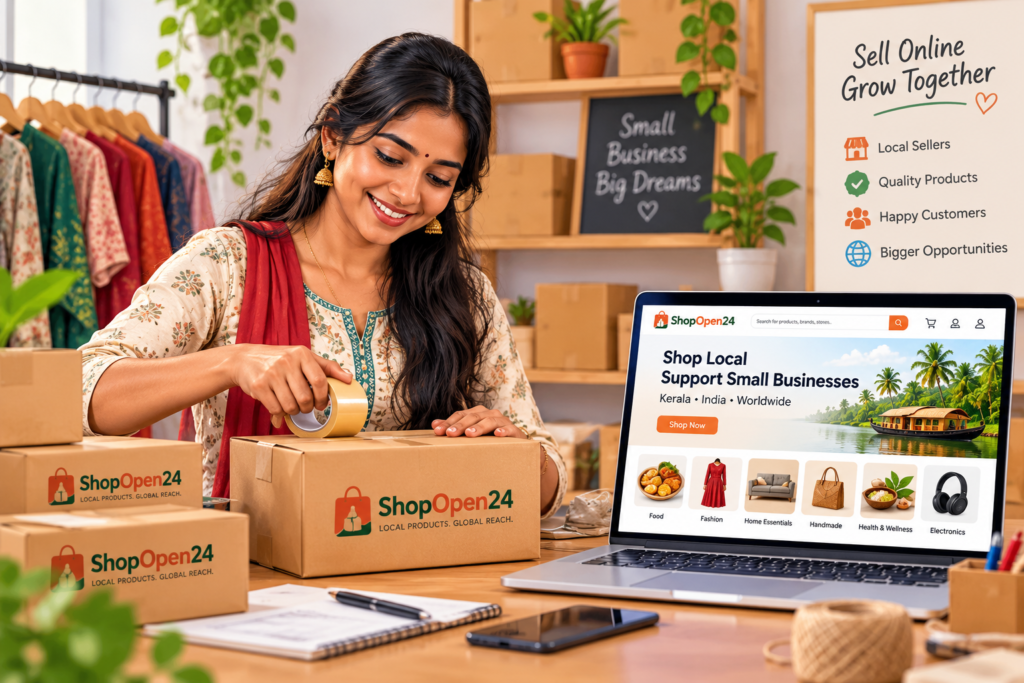
If you want to sell online in India, now is one of the best times to start. Millions of people shop on their phones every day, UPI payments are everywhere, and courier services reach even small towns. You no longer need a big shop, a big budget or a big team. You need a good product, a few registrations and a clear plan.
This guide shows you how to sell online in India step by step. You will learn how to choose a product, register your business, pick the right platform, take payments, ship orders and get your first customers. It is written for beginners, home-based sellers and small shop owners who want to go digital. Whether you sell handmade goods, clothes, groceries or digital services, the steps below will help.
Why You Should Sell Online in India Today
India has one of the largest internet user bases in the world. Smartphones are cheap, data is affordable, and many first-time buyers in smaller cities now order online. This opens a big market for new sellers.
Here is why online selling works so well for small businesses:
- Low starting cost. You can start with a free marketplace account or a simple website.
- A national customer base. A seller in Kerala can serve a buyer in Punjab without opening a second shop.
- Easy digital payments. UPI, cards, net banking and wallets are familiar to most buyers.
- Flexible work. You can run the business from home and grow at your own pace.
- Government support. Programs such as Udyam registration and ONDC aim to help small sellers join digital commerce.
If you are still looking for a product or business idea, read our guide on small business ideas first and come back here.
Step 1: Choose the Right Product to Sell Online in India
Your product decides almost everything: your profit, your shipping method and your marketing. Do not choose a product only because it is trending. Choose one that fits your skills, your budget and real customer demand.
Look for products that are:
- Easy to ship (light, small and not fragile)
- In demand all year, or with a clear season you can plan for
- Priced so that you earn a healthy margin after costs
- Hard for big brands to copy, such as handmade, regional or niche items
Popular categories for people who sell online in India:
- Fashion, ethnic wear and accessories
- Home décor and handicrafts
- Organic food, spices and snacks (these need FSSAI registration)
- Beauty and personal care products
- Digital products such as courses, templates and e-books
- Local services such as tuition, repairs and design
To check demand, search your product on Amazon India and Flipkart. Look at the number of reviews, the price range and the complaints in the reviews. Complaints show you where you can do better. You can also use Google Trends to see whether interest is rising or falling.
Start with a small range of products. Ten to twenty well-chosen items are easier to manage than a catalogue of five hundred.
Step 2: Register Your Business Before You Sell Online in India
Many beginners skip this step and face problems later. A few basic registrations make your business trusted and legal.
Business structure. Most small sellers start as a sole proprietorship. If you plan to grow or bring in partners, you can later move to an LLP or a private limited company.
Udyam registration. This is the government registration for micro, small and medium enterprises. It is free and done online at the Udyam Registration portal. It can help with loans, subsidies and some marketplace benefits.
GST registration. The Goods and Services Tax rules decide whether you must register. Many marketplaces require a GST number from sellers, even if your turnover is below the usual threshold, with some exceptions. Check the latest rules on the official GST portal or ask a chartered accountant, because rules and limits change.
FSSAI license. If you sell packaged food or anything edible, you need a license from the Food Safety and Standards Authority of India.
Business bank account. Keep business money separate from personal money. It makes accounting and tax filing much simpler.
Note: This article gives general information, not legal or tax advice. Always confirm current requirements with a professional.
Step 3: Choose Where to Sell Online in India
You have two main routes: sell on a marketplace, or build your own store. Many successful sellers use both.
Selling on Marketplaces
Marketplaces already have millions of visitors, so you get customers quickly. Popular choices include:
- Amazon Seller Central India
- Flipkart Seller Hub
- Meesho Supplier Panel,
- ShopOpen24 seller account , where you can create an account and start showcasing your products
- popular for low-cost products and resellers
- Etsy and similar platforms for handmade and creative products
Pros: Ready traffic, built-in trust, and logistics help.
Cons: Fees and commissions, strict rules, price competition, and you do not own the customer relationship.
Selling on Your Own Website
A website gives you full control over your brand, your prices and your customer data. You can build one with WordPress and WooCommerce, Shopify or other store builders.
Pros: Higher margins, a brand you own, and email and WhatsApp lists you can reuse.
Cons: You must bring your own traffic, which takes time and effort.
Which Should You Choose?
If you are new, start on one marketplace to learn how orders, shipping and returns work. At the same time, build your own store so that you are not dependent on one platform. You can also list your business on a directory like ShopOpen24’s Add Your Business page to get local visibility and backlinks to your store.
Step 4: Set Up Payments and Shipping
Customers will only buy if paying is easy and delivery is reliable.
Accepting Payments
If you sell on a marketplace, payments are handled for you. On your own website, use a trusted payment gateway such as Razorpay, Cashfree or PayU. Make sure your checkout supports:
- UPI and QR payments
- Debit and credit cards
- Net banking
- Cash on delivery (COD), which many Indian buyers still prefer, though it can raise return rates
Shipping Your Orders
Shipping aggregators such as Shiprocket let you compare couriers, print labels and track parcels in one dashboard. This saves time compared with contacting each courier separately.
Shipping tips for beginners:
- Pack products securely, because damage leads to returns and bad reviews.
- Weigh and measure your parcels correctly to avoid extra charges.
- Be honest about delivery time. Promise a little more time and deliver early.
- Offer a clear return and refund policy.
Step 5: Create Product Listings That Convert
A strong listing turns visitors into buyers. When you sell online in India, your buyer cannot touch the product, so your photos and words must do that job.
Photos
- Use natural light and a clean background.
- Show the product from several angles, plus a close-up of details.
- Add one photo that shows size or scale, for example next to a hand or in use.
Titles
- Include the product name, the main feature and the use. Example: “Handwoven Cotton Saree – Soft, Lightweight, Ideal for Daily Wear.”
Descriptions
- Write short paragraphs and a few bullet points.
- Mention material, size, colour options, care instructions and what is in the box.
- Answer the questions buyers usually ask before they ask them.
Pricing
- Add up product cost, packaging, shipping, platform fees, GST and returns. Then add your profit margin.
- Do not compete only on the lowest price. Compete on quality, service and brand.
Step 6: Use SEO to Sell Online in India Without Paying for Ads
Paid ads cost money, but search engine optimisation brings free visitors over time. If you run your own store, SEO is one of the best long-term ways to sell online in India.
Start with these basics:
- Keyword research. Find the phrases customers type into Google, such as “buy cotton kurti online India.” Use them in product titles, headings and descriptions.
- Clear page titles and meta descriptions. Write a unique title and short summary for every page.
- Helpful content. Publish blog posts that answer your customers’ questions. This also builds trust.
- Fast, mobile-friendly pages. Most Indian shoppers use phones, so your site must load quickly on mobile data.
- Image alt text. Describe every image so search engines understand it.
- Internal and external links. Link related pages on your site, and link out to useful, trusted sources.
- Google Business Profile. If you also have a physical shop or serve a local area, set up a profile so you appear in local searches and Maps.
To learn the fundamentals straight from Google, read the Google Search Central SEO Starter Guide. Tools like Rank Math can guide you on each page as you write.
For more local search tips, see our Local SEO guide.
Step 7: Market Your Store and Win Your First Customers
Having a store is not enough. You must tell people it exists. Try these low-cost ideas:
- Instagram and Facebook. Post photos, short videos and customer stories. Reels can bring in new followers for free.
- WhatsApp Business. Create a catalogue, share offers and answer questions quickly. Many Indian buyers like to confirm details on WhatsApp before ordering.
- Friends, family and local groups. Your first ten orders often come from people who already know you.
- Reviews and ratings. Politely ask happy customers to leave a review. Reviews build trust faster than any advertisement.
- Email and SMS. Collect contact details and send offers during festivals and sales seasons like Diwali.
- Online communities. Join forums and groups to learn from other sellers and share your experience. You can do this in the ShopOpen24 community, where small business owners exchange advice.
- Paid ads, when ready. Once you know which products sell, start small with Meta or Google ads and track your results.
Common Mistakes When You Sell Online in India
Avoid these errors that cost new sellers time and money:
- Skipping registrations such as GST or FSSAI when they are required.
- Wrong pricing, forgetting fees, shipping, returns and taxes.
- Poor photos and weak descriptions that make products look untrustworthy.
- Ignoring customer service. Slow replies lead to bad reviews.
- Depending on one platform. If your account is suspended, you lose all your sales.
- Selling too many products too early instead of focusing on a few winners.
- Not tracking numbers. Review your sales, returns and profit every month.
Frequently Asked Questions
Can I sell online in India without GST?
It depends on your product, turnover and the platform. Many marketplaces ask for GST registration, while some sellers of certain products or small volumes may be exempt. Check the official GST portal or consult an accountant.
How much money do I need to start?
You can start small. Many sellers begin with a free marketplace account and a small stock of products. Your main costs are inventory, packaging, shipping and, if you build your own site, hosting and a domain.
Is it better to sell on Amazon, Flipkart or my own website?
Marketplaces give you faster traffic, and your own website gives you better margins and brand control. Beginners usually start with a marketplace and build their own store alongside it.
Do I need a website to sell online in India?
Not at the very start. You can sell through marketplaces or social media. But a website builds trust, helps you rank on Google and gives you something you own.
How long does it take to make the first sale?
It varies. Some sellers get orders within days on marketplaces, while a new website can take a few weeks or months to gain traction. Good photos, fair pricing and consistent marketing speed things up.
Conclusion: Start Small, Learn Fast, and Grow
To sell online in India, you do not need a big investment or special technical skills. Pick a product with real demand, complete your basic registrations, choose a marketplace or build your own store, make payments and shipping easy, and market yourself every week. Learn from each order, improve your listings, and listen to your customers.
Ready to put your business online? List your business on ShopOpen24, join the community to learn from other sellers, and visit ShopOpen24 for more practical guides. Start with one product and one platform today, and build from there.