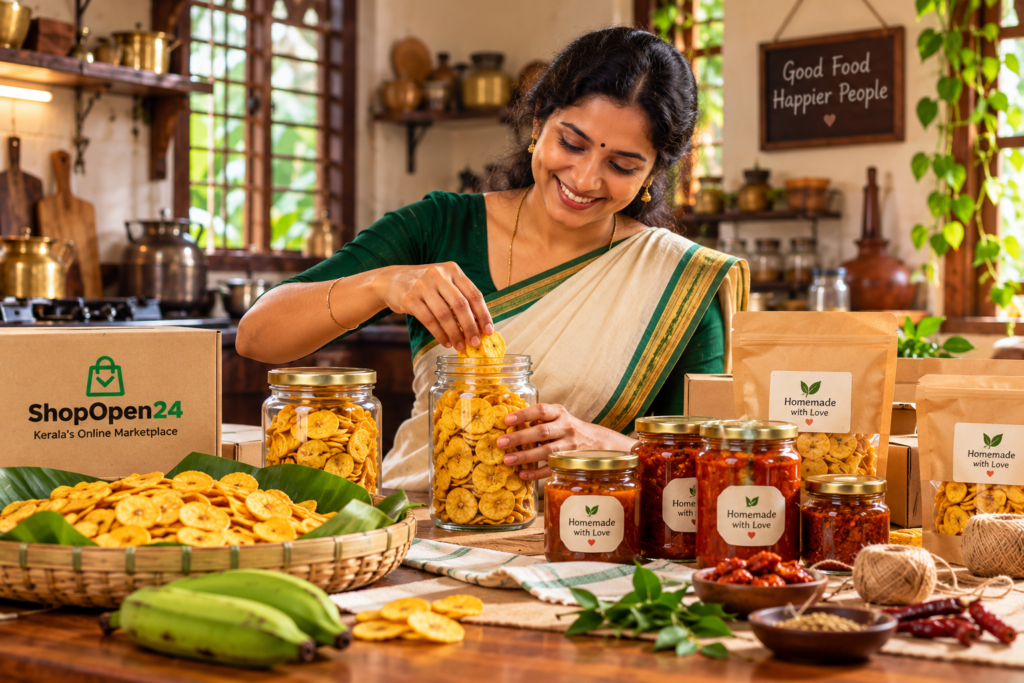
Kerala’s kitchens have always been small businesses waiting to happen. Between banana chips, achar, payasam mixes, and spice powders passed down through generations, there’s a ready market of people who want authentic, homemade flavors — and increasingly, they’re looking for it online. If you’ve been wondering how to sell homemade food online in Kerala, this guide walks you through every practical step, from legal paperwork to your first delivery.
Whether you’re a homemaker in Kochi looking to turn weekend baking into income, or someone in a small town in Malappuram wanting to sell traditional pickles beyond your neighborhood, selling homemade food online in Kerala is more achievable today than ever — if you follow the right process.
Why Sell Homemade Food Online in Kerala Right Now
Kerala has a few advantages that make this a smart time to start:
- High internet and smartphone penetration, even in rural areas
- A large NRI population abroad craving authentic Kerala snacks and pickles shipped from home
- Growing demand for “home-style” and chemical-free food over mass-produced alternatives
- Low startup cost compared to a physical shop — you’re using your existing kitchen
The real challenge isn’t the cooking. It’s the business side: licensing, pricing, packaging, finding customers, and getting orders delivered safely. Let’s go through each one.
Step 1: Get Your FSSAI License and Legal Registrations
Before you sell a single packet of banana chips online, you need to be legally registered. This protects you and builds trust with buyers.
FSSAI Registration or License
Any food business in India, including home-based ones, needs registration under the Food Safety and Standards Authority of India. For small home businesses with turnover under ₹12 lakh a year, a basic FSSAI registration is usually sufficient; larger operations need a state or central license. You can check the exact category and apply directly through the official FSSAI website.
Other Registrations to Consider
- Udyam (MSME) Registration – Free and useful for accessing small business schemes. Register through the MSME Udyam portal.
- GST Registration – Required once your turnover crosses the threshold, or if you plan to sell through larger marketplaces.
- Local Panchayat/Municipality Trade License – Some local bodies require this for a home-based food unit; check with your local self-government office.
Having these in place isn’t just about avoiding fines — buyers trust a seller who clearly displays FSSAI details on packaging and on their online store.
Step 2: Choose Your Homemade Food Niche
“Homemade food” is broad. Narrowing your focus helps you build a reputation faster and makes marketing easier.
Popular homemade food categories that do well online from Kerala include:
- Snacks – banana chips, jackfruit chips, achappam, kuzhalappam
- Pickles and condiments – mango achar, fish pickle, garlic pickle
- Spice mixes and masalas – meat masala, fish fry masala, sambar powder
- Sweets – unniyappam, halwa, payasam mixes
- Health foods – ragi powder, millet-based snacks, cold-pressed coconut oil
Pick one or two categories to start. A focused product line is easier to price, package consistently, and market with a clear brand story — “Kerala’s traditional fish pickle made the old-fashioned way” sells better than “we make everything.”
Step 3: Set Up a Hygienic Kitchen and Reliable Packaging
Online buyers can’t see your kitchen, so your packaging has to do the talking.
Kitchen hygiene basics:
- Dedicate a clean, pest-free area for food preparation
- Use food-grade containers and tools
- Maintain a simple log of production dates and batches
- Follow FSSAI’s basic hygiene guidelines for home-based food businesses
Packaging for shipping:
Homemade food traveling across Kerala — or across the world to NRI customers — needs packaging that survives transit. Vacuum-sealed pouches for chips and pickles, tamper-proof jars, and sturdy outer boxes prevent leaks and spoilage. A good local courier or logistics partner, including India Post’s parcel service, can advise on safe packaging for food items being shipped long distance.
Always label each product with ingredients, preparation date, best-before date, and your FSSAI number. This single step builds enormous trust with first-time online buyers.
Step 4: Price Your Homemade Food Products Correctly
Underpricing is the most common mistake home food sellers make. Your price needs to cover more than just ingredients.
Factor in:
- Raw material cost
- Your time (even if it’s “just” a home business, your labor has value)
- Packaging materials
- Platform or payment gateway fees
- Shipping cost (or build it into the price for “free shipping” offers)
- A reasonable profit margin, typically 25–40% for homemade food products
Compare your pricing to similar products from other Kerala home sellers online, but don’t race to the bottom. Buyers paying for homemade food are often paying for authenticity and quality, not just the lowest price.
Step 5: Build Your Online Presence and Store
This is where most people get stuck — and it doesn’t need to be complicated. You have two main paths, and most successful sellers use both.
Option A: List your business where buyers are already searching.
Platforms built for small and home businesses make it easy to get discovered without building anything from scratch. For example, you can add your business for free on ShopOpen24 and get listed where Kerala shoppers are actively searching for homemade food sellers near them.
Option B: Build your own online store.
A dedicated store gives you full control over branding, pricing, and customer data. If you’re ready to manage your own storefront, you can set one up and manage orders directly through your ShopOpen24 account.
Option C: Connect with other home sellers.
You don’t have to figure this out alone. Joining a community of other home-based and small business owners in Kerala — sharing what’s working, what buyers are asking for, and how to handle logistics — speeds up your learning curve enormously. The ShopOpen24 community is built exactly for this kind of peer support.
Good product photography matters a lot here. A few tips:
- Shoot in natural daylight near a window
- Use a plain, uncluttered background
- Show the product both packaged and plated/served
- Include a close-up shot that highlights texture (crispiness of chips, chunkiness of pickle, etc.)
Step 6: Market Your Homemade Food Business
Once you’re set up, visibility is everything. A few channels work especially well for homemade food sellers in Kerala:
- WhatsApp Business – Share your catalog, take orders, and send updates directly to repeat customers
- Instagram and Facebook – Short videos of the cooking process perform well; Kerala’s diaspora audience engages heavily with “home taste” content
- Word of mouth and local groups – Residents’ association groups, church/temple community groups, and local Facebook groups are often an underrated first customer base
- SEO-friendly online listings – Being listed where people are already searching for “homemade food Kerala” or similar terms, such as through your ShopOpen24 business listing, brings in buyers actively looking to purchase, not just browsing
Consistency matters more than frequency. Posting a simple update twice a week beats one burst of activity followed by silence.
Step 7: Manage Orders, Delivery, and Customer Reviews
As orders start coming in, a few systems will save you a lot of stress:
- Order tracking – Even a simple spreadsheet noting order date, product, customer, and delivery status prevents missed orders
- Delivery partners – For local delivery within your town or city, local courier services or delivery apps work well; for pan-India or international shipping, speak to a courier that handles food items specifically, since packaging requirements differ from regular parcels
- Customer reviews – Politely ask happy customers to leave a review or testimonial. Reviews are often the single biggest factor in a first-time buyer’s decision to try a new homemade food seller
Respond to customer messages quickly, and be upfront about shelf life and storage instructions for every product you sell — this reduces complaints and builds repeat buyers.
Common Mistakes to Avoid
- Skipping FSSAI registration — even informally, this can get your business shut down or fined
- Inconsistent product quality between batches, which quickly damages trust
- No clear pricing or hidden shipping costs that frustrate buyers at checkout
- Poor packaging leading to spoiled or leaked products during transit
- Not listing anywhere searchable — relying only on word of mouth limits growth
Final Thoughts
Selling homemade food online in Kerala is one of the most accessible small business opportunities available today — low startup cost, strong demand, and a built-in advantage in authenticity that mass-market brands can’t replicate. The steps aren’t complicated: get licensed, package well, price fairly, get discovered, and deliver reliably.
If you’re ready to start, the fastest first step is getting your business in front of buyers who are already looking. You can add your business on ShopOpen24 for free, set up your seller account, and connect with other home food entrepreneurs in the ShopOpen24 community to learn what’s working right now.