How to Start a Homemade Food Business: A Complete Step-by-Step Guide
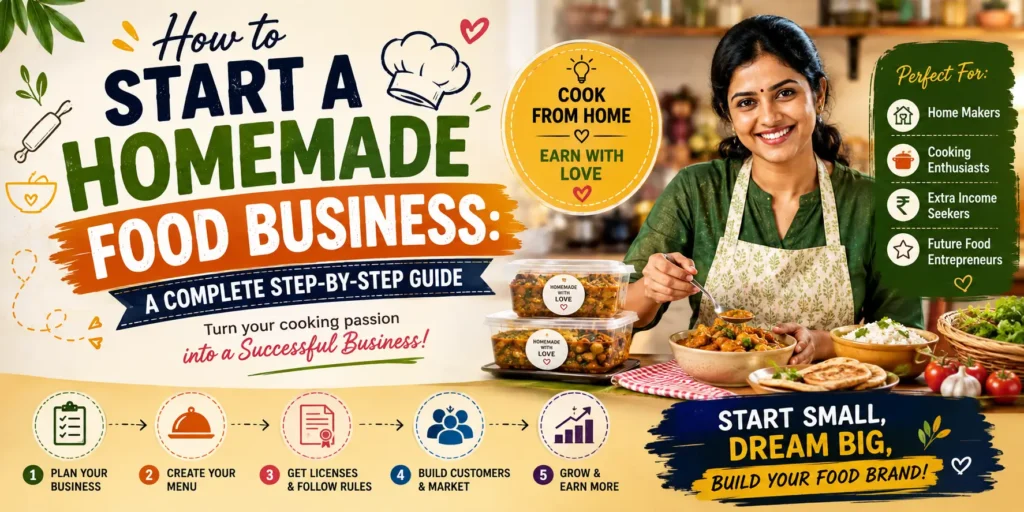
How to Start a Homemade Food Business: A Complete Step-by-Step Guide
If you love cooking or baking and dream of turning that passion into income, learning how to start a homemade food business is one of the most affordable ways to become your own boss. Unlike opening a restaurant or a commercial bakery, a homemade food business lets you begin small, test your recipes on real customers, and grow at your own pace — all without a huge upfront investment.
In this guide, you’ll learn everything you need to know: legal requirements, choosing a food niche, pricing your products, packaging, branding, and marketing your homemade food business online and locally.
Why Start a Homemade Food Business?
The food industry is one of the most resilient sectors in the world. People will always need to eat, and increasingly, they’re looking for fresh, homemade, and locally made alternatives to mass-produced grocery store items. Starting a homemade food business allows you to:
- Work from home with low overhead costs
- Turn a hobby you already love into a paying venture
- Build a loyal local customer base
- Test products before scaling into a larger operation
- Set your own hours and grow gradually
Whether you want to sell banana bread to neighbors or build a full online bakery brand, the fundamentals are the same. Let’s break down the process step by step.
How to Become a Seller on ShopOpen24 (Complete 2026 Guide)
Step 1: Choose Your Food Niche
Before you do anything else, decide what you want to sell. Trying to make “a bit of everything” often confuses customers and stretches your time too thin. Instead, pick a niche you can master and market clearly.
Popular homemade food business ideas include:
- Baked goods (cakes, cookies, cupcakes, bread)
- Jams, pickles, and preserves
- Sauces, spice blends, and condiments
- Granola, snack bars, and trail mixes
- Meal prep or catering services
- Candy, chocolates, and confections
- Ethnic or regional specialty foods
When picking your niche, think about three things: what you’re genuinely good at making, what has demand in your area, and what fits your local food safety regulations (some categories, like items requiring refrigeration, face stricter rules than shelf-stable goods).
Step 2: Research Local Laws and Licensing
This is the step most beginners skip — and the one that can shut a business down fast if ignored. Almost every country and region has specific rules for selling food made at home, often called “cottage food laws” in the United States, but similar frameworks exist worldwide.
Typical requirements include:
- Registering your business with your local government or municipality.
- Food handler certification or training, which usually involves a short course and test.
- Kitchen inspection in some regions, even if it’s your home kitchen.
- Labeling requirements, including ingredients, allergens, net weight, and your business name/address.
- Sales limits, since many cottage food laws cap how much revenue you can earn before you need a commercial license.
- Restricted product lists — some homemade food laws only allow “non-hazardous” foods, meaning shelf-stable items rather than foods needing refrigeration.
Because laws vary so much by country, state, and even city, search for your specific region’s “cottage food law” or “home-based food business license” before you sell a single item. Skipping this step risks fines, forced shutdowns, or legal trouble later.
Step 3: Write a Simple Business Plan
You don’t need a 40-page document, but you do need clarity on the basics. A simple homemade food business plan should answer:
- What am I selling, and to whom?
- How much does each item cost me to make (ingredients, packaging, time)?
- What will I charge, and what’s my profit margin?
- How will customers find and order from me?
- What’s my goal in 3 months, 6 months, and 1 year?
Writing this down — even in a single page — keeps you focused and helps you notice problems (like thin profit margins) before they become expensive mistakes.
Step 4: Set Up Your Home Kitchen for Production
Once your paperwork is sorted, prepare your workspace. Even if regulations don’t require a separate kitchen, treat your food prep area professionally:
- Keep a dedicated, sanitized workspace for your business items
- Invest in proper storage containers to keep ingredients fresh
- Use a reliable scale for consistent measurements and portion costs
- Keep a cleaning and sanitizing schedule
- Track inventory so you never run out of key ingredients mid-order
Consistency is what turns first-time buyers into repeat customers. If your product tastes slightly different every batch, customers notice — and not in a good way.
Step 5: Price Your Products for Profit
Many new homemade food sellers underprice their products because they only count ingredient cost. That’s a mistake. Your pricing should account for:
- Ingredient costs
- Packaging materials
- Your time (an hourly rate for prep, cooking, and cleanup)
- Utilities (electricity, gas, water used in production)
- Marketing and delivery costs
- A reasonable profit margin (typically 20–40%)
A simple formula: (Total Cost per Batch ÷ Number of Units) + Profit Margin = Selling Price.
Don’t be afraid to charge what your product is worth. Homemade and small-batch items often justify a premium price because customers are paying for quality, freshness, and a personal touch that mass-produced brands can’t offer.
Step 6: Create Branding That Stands Out
Your brand is more than a logo — it’s the entire impression customers get from your business. For a homemade food business, branding includes:
- A memorable business name
- Clean, appealing packaging and labels
- Consistent colors and fonts across labels, social media, and your website
- A short, clear brand story (why you started, what makes your food special)
Simple, consistent branding builds trust. When your labels look professional and your packaging is neat, customers assume the food inside meets the same standard — even before they taste it.
Step 7: Take Professional-Looking Photos
In food business, people eat with their eyes first. Whether you’re posting on social media or listing products on a website, invest time in good photography:
- Use natural daylight near a window
- Keep backgrounds simple and uncluttered
- Style your food attractively (fresh garnish, clean plates, good angles)
- Take multiple shots and choose the sharpest, most appetizing ones
You don’t need expensive equipment — a smartphone camera with good lighting can produce excellent results.
Step 8: Build an Online Presence
Today, almost every successful homemade food business needs some form of online presence, even if most sales happen locally. Consider these channels:
- Social media pages (Instagram and Facebook work especially well for food photos)
- A simple website or online store where customers can see your menu, prices, and place orders
- Local marketplace groups for community-based selling
- Google Business Profile, so people searching nearby can find you
Posting consistently — even 2–3 times a week — keeps your business visible. Share behind-the-scenes content, customer testimonials, and new product launches to keep followers engaged.
Go to the official ShopOpen24 Vendor Onboarding page. This is where all seller registration happens — you’ll see both a login section (for existing vendors) and a registration form (for new sellers).
Step 9: Market Your Homemade Food Business
Marketing doesn’t need a big budget. Some of the most effective strategies for homemade food businesses are:
- Word of mouth: Ask happy customers to refer friends and family
- Local farmers markets or pop-up stalls: Great for visibility and direct feedback
- Sampling: Letting people taste your product often converts them into buyers
- Loyalty discounts: Reward repeat customers with small discounts or freebies
- Collaborations: Partner with local cafes, gyms, or events to supply your products
- Email or WhatsApp lists: Keep past customers updated on new items and promotions
Track which marketing channels bring in the most orders, and focus your energy there instead of spreading yourself thin across every platform.
How to Sell Products Online from Home (2026 Guide
Step 10: Handle Orders, Payments, and Delivery Smoothly
As orders increase, staying organized becomes critical. Set up a simple system for:
- Taking orders (a form, message, or online store)
- Confirming order details and deadlines with customers
- Accepting payments (cash, bank transfer, or digital payment apps)
- Packaging orders securely for pickup or delivery
- Following up after delivery to ask for feedback or reviews
A smooth, professional ordering experience often matters as much as the food itself. Customers remember how easy — or frustrating — it was to order from you.
Step 11: Collect Reviews and Testimonials
Social proof builds trust faster than almost anything else. After a successful order, kindly ask satisfied customers to:
- Leave a review on your Google Business Profile
- Share a photo or story on social media and tag your page
- Provide a short testimonial you can use on your website or packaging
Positive reviews reassure new customers who haven’t tried your food yet, which is especially important for a home-based brand without a physical storefront.
Step 12: Plan for Growth
Once your homemade food business gains steady customers, you can think about scaling. Growth options include:
- Expanding your product line based on customer requests
- Moving into a licensed commercial kitchen for higher production volume
- Selling wholesale to local cafes or shops
- Opening an online store for nationwide shipping (for shelf-stable products)
- Hiring help for packaging, delivery, or social media management
Growth should happen gradually. Scaling too fast before your systems (recipes, pricing, supply chain) are solid can hurt quality and customer trust.
Common Mistakes to Avoid
Learning how to start a homemade food business also means learning what not to do. Avoid these common pitfalls:
- Skipping licensing — even small home businesses can face legal trouble without proper registration.
- Underpricing products — this leads to burnout and unsustainable profit margins.
- Inconsistent quality — customers expect the same great taste every time.
- Ignoring packaging — poor packaging can damage products and reduce perceived value.
- No online presence — even local businesses benefit from being discoverable online.
- Overexpanding too soon — adding too many products before mastering a few can dilute your brand.
Final Thoughts
Starting a homemade food business is one of the most accessible paths into entrepreneurship. With the right recipe, proper licensing, smart pricing, and consistent marketing, a small kitchen operation can grow into a recognized local — or even online — food brand. The key is to start small, stay legal, focus on quality, and build genuine relationships with your customers.
Every successful food brand — from neighborhood bakeries to national snack companies — started with someone cooking in their own kitchen and believing their food was worth sharing. With patience and the steps outlined above, your homemade food business can be next.