Kerala Local Products: Complete Guide 2026
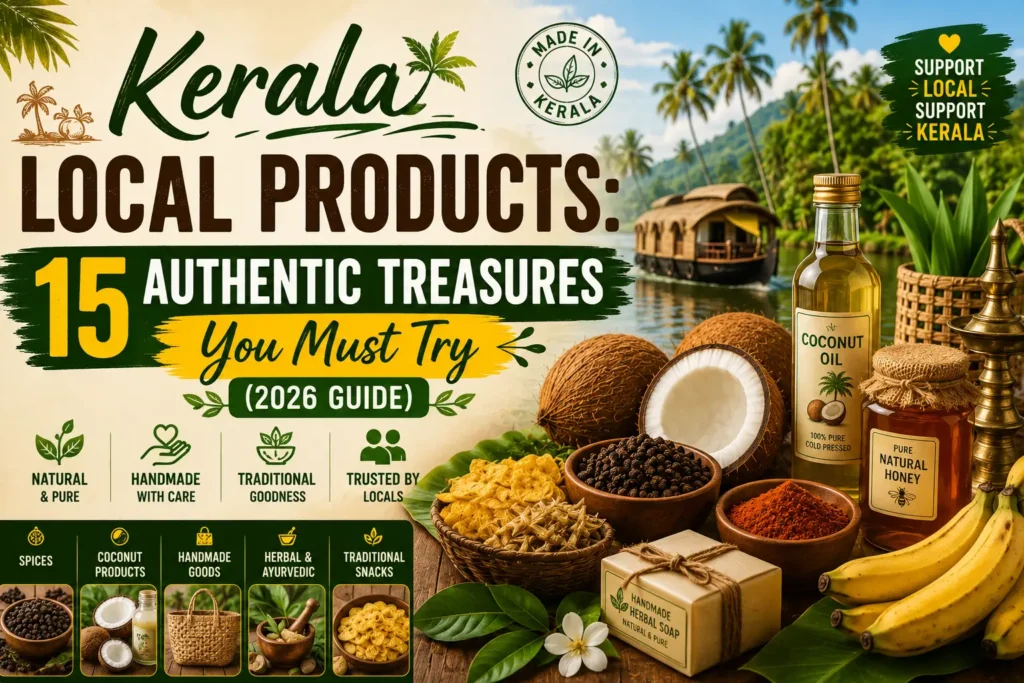
Kerala local products carry the soul of a state shaped by monsoon rains, backwaters, spice hills, and centuries of trade with the outside world. Long before Kerala became a tourism brand built around the tagline “God’s Own Country,” it was already famous across the ancient world for what it grew, wove, and crafted. Arab traders, Chinese merchants, and European colonizers all sailed to Kerala’s coast chasing the same thing — its produce. Today, that legacy lives on in the everyday goods that come out of Kerala’s kitchens, farms, and workshops.
This guide walks through the most authentic Kerala local products worth knowing about in 2026 — what makes each one special, how to tell a genuine item from a mass-produced imitation, and where you can buy them online without leaving your home.
Why Kerala Local Products Are So Distinct
Kerala’s geography explains most of it. A narrow strip of land squeezed between the Arabian Sea and the Western Ghats gives the state a rare combination of tropical rainfall, fertile soil, and a coastline perfect for trade. That combination produced three industries that still define Kerala’s economy: spice cultivation, coconut farming, and coir (coconut fiber) processing.
On top of that, Kerala has an unusually strong tradition of craftsmanship — passed down through families rather than factories. Many of the region’s most recognized goods, from Aranmula’s metal mirrors to Balaramapuram’s handwoven sarees, still carry a Geographical Indication (GI) tag, a legal recognition that a product’s quality or reputation is tied specifically to its place of origin. That’s part of why shoppers actively search for genuine Kerala local products instead of settling for generic alternatives sold elsewhere.
1. Spices: The Original Kerala Local Products
Kerala earned the nickname “the Spice Garden of India” for good reason. The hill regions of Idukki, Wayanad, and Kozhikode (formerly Calicut) still produce some of the world’s most prized:
- Black pepper – once called “black gold,” pepper from Kerala’s Malabar region remains a benchmark for quality worldwide.
- Cardamom – grown in the cool highlands, Kerala’s cardamom is known for its intense aroma and oil content.
- Cloves, cinnamon, and nutmeg – smaller in volume but equally prized by chefs and exporters.
India’s Spices Board, a body under the Ministry of Commerce and Industry, oversees the development and export promotion of the spice sector, and Kerala continues to be central to that export economy. If you’re buying spices, look for whole, unblended products rather than pre-ground powders, which lose potency and are easier to adulterate.
2. Coconut-Based Kerala Local Products
The coconut palm is so essential to Kerala that the state’s very name is believed to derive from “Kera,” the Malayalam word for coconut tree. Nearly every part of the coconut is used:
- Virgin coconut oil, cold-pressed using traditional wooden “chekku” methods
- Coconut milk and cream, a staple in Kerala curries
- Coconut jaggery (kalkandam), a natural sweetener
- Coir doormats, ropes, and mats, made from the coconut husk fiber
Cold-pressed coconut oil in particular has become one of the most searched-for Kerala local products internationally, driven by growing interest in natural skincare and cooking oils free from chemical processing.
3. Coir Products: Kerala’s Global Export Legacy
Kerala is the birthplace of India’s coir industry, and Alappuzha (Alleppey) is often called the coir capital of the world. Coir — the fiber extracted from coconut husk — is spun into yarn and woven into doormats, rugs, ropes, and even geotextiles used in soil erosion control.
The Coir Board, a statutory body established under the Coir Industry Act of 1953, is responsible for the promotion and development of the coir industry in India. This industry still supports hundreds of thousands of livelihoods in coastal Kerala, particularly among rural women employed in spinning and weaving units.
4. Handloom Textiles: Kasavu and Beyond
If there’s one fabric that instantly signals “Kerala,” it’s the cream-and-gold kasavu — a cotton fabric bordered with zari (gold thread) traditionally worn during Onam and weddings. The town of Balaramapuram, near Thiruvananthapuram, is the historic center of this weaving tradition and holds a GI tag protecting its handloom identity.
Other notable handloom Kerala local products include:
- Kasavu sarees and mundus (the traditional lower garment worn by Kerala men)
- Handwoven cotton stoles and shawls
- Kuthampully sarees, known for intricate temple-style borders
Buying handloom directly supports weaver cooperatives rather than power-loom imitations that flood the market during festival seasons.
5. Ayurveda and Wellness Products
Kerala is widely regarded as the home of Ayurveda in its most preserved form. Ayurvedic centers across the state — many centuries old — produce oils, balms, and herbal formulations still made using classical texts and traditional preparation methods rather than modern shortcuts.
Popular Ayurveda-based Kerala local products include:
- Herbal hair oils (bhringraj and neelibhringadi oils)
- Ayurvedic soaps and skincare using neem, turmeric, and sandalwood
- Panchakarma-related wellness oils for massage therapy
When shopping for Ayurvedic goods, check for a valid AYUSH license number on the packaging, which confirms the product meets India’s regulatory standards for herbal medicine and cosmetics.
6. Aranmula Kannadi: The Metal Mirror With No Reflection Trick
Among the more unusual Kerala local products is the Aranmula Kannadi, a metal-alloy mirror made in the village of Aranmula using a closely guarded family formula. Unlike glass mirrors, the reflective surface here is a polished metal alloy, and the exact composition remains a trade secret passed down within a handful of families. It holds a GI tag, and genuine pieces are almost always sold with a certificate of authenticity due to how frequently the design is copied.
7. Banana Chips, Jackfruit Chips, and Kerala Snacks
No discussion of Kerala local products is complete without its snack culture. Kerala-style banana chips — thin, deep-fried in coconut oil, and lightly salted — taste noticeably different from banana chips made elsewhere, largely because of the coconut oil frying method and the use of the Nendran banana variety.
Other well-loved snacks include:
- Jackfruit chips
- Sharkara varatti (jaggery-coated banana chips)
- Kerala-style spiced peanuts and mixture (chevda)
These snacks travel well, which has made them one of the most gifted Kerala local products for people living outside the state.
8. Seafood and Coastal Specialties
With a coastline stretching over 590 kilometers, Kerala’s fishing communities supply some of India’s best-known seafood exports, including prawns, tiger shrimp, and Malabar-style dried fish (unakka meen). Traditional fish and prawn pickles, made with Kerala’s signature blend of chilies, curry leaves, and coconut oil, are another regional favorite that travels well when properly sealed.
9. Wood Carvings and Bell Metal Crafts
Kerala’s temple towns are known for intricate wood carvings, often depicting mythological scenes, along with bell metal (odu) items like the traditional nilavilakku oil lamp. These pieces are handcrafted by artisan families in regions like Nadavaramba and remain popular as home décor and gifting items, especially around festivals like Onam and Vishu.
Kerala Local Products for Onam and Vishu Season
Two festivals drive the biggest surge in demand for Kerala local products each year: Onam, the state’s harvest festival, and Vishu, the Malayalam New Year. Around these dates, households stock up on specific items that rarely see the same demand the rest of the year:
- Onasadya essentials – banana leaves, jaggery, coconut oil, and the spice mixes used for the traditional 26-dish Onam feast
- New clothing in kasavu – it’s customary to wear a new kasavu mundu or saree for Onam
- Nilavilakku lamps and floral rangoli (pookalam) supplies – used to decorate homes during the ten-day Onam celebration
- Vishukkani items – a ceremonial arrangement of rice, gold-colored konna flowers, fruits, and a mirror, viewed first thing on Vishu morning for good fortune
Retailers who stock Kerala local products often see order volumes double or triple in the weeks leading up to these festivals, both from within Kerala and from the large Malayali diaspora abroad trying to recreate festival traditions away from home.
The Role of Kerala’s Diaspora in Global Demand
Kerala has one of the largest state-level diasporas in India, with millions of Malayalis working across the Gulf countries, North America, Europe, and Southeast Asia. This dispersed population has become a major driver of demand for Kerala local products sold online, since many of these goods — particular spice blends, pickles, and banana chips — simply aren’t available in local supermarkets abroad. This has pushed several Kerala-based sellers to build dedicated e-commerce operations rather than relying solely on tourist footfall or physical export contracts.
How to Identify Genuine Kerala Local Products
With demand rising, imitation and mass-manufactured copies are common — especially for handloom textiles, Aranmula mirrors, and Ayurvedic oils. A few practical checks:
- Look for a GI tag where applicable — it’s a legal guarantee of regional origin.
- Check ingredient sourcing for spices and oils; genuine products list origin regions, not just “Product of India.”
- Buy from vendors who specialize in Kerala goods rather than general marketplaces reselling unverified stock.
- Read return and authenticity policies before purchasing higher-value items like Ayurvedic treatments or handloom sarees.
Where to Buy Kerala Local Products Online
If you’d rather skip the guesswork, ShopOpen24 curates a range of Kerala local products for buyers who want authenticity without traveling to the source. Whether you’re looking for cold-pressed coconut oil, handloom kasavu wear, traditional spices, or Ayurvedic essentials, browsing a dedicated Kerala-focused store like ShopOpen24 is often the fastest way to get genuine goods delivered directly to your door.
Frequently Asked Questions About Kerala Local Products
What are the most popular Kerala local products for gifting? Banana chips, spice boxes, coconut oil, and small Aranmula-style mirrors are among the most commonly gifted Kerala local products, since they’re compact, travel well, and represent the state’s culture clearly.
Are Kerala local products more expensive than similar goods from other states? Genuine, GI-tagged, or traditionally handmade items usually cost more than mass-produced equivalents, mainly because of manual labor, smaller production batches, and quality-focused sourcing (such as single-origin spices or hand-spun coir).
Can Kerala local products be shipped internationally? Many can, though perishable items like fresh seafood or fried snacks have shorter shelf lives and may face import restrictions in certain countries. Dry spices, oils, textiles, and handicrafts generally ship well internationally.
How do I know if an Ayurvedic product from Kerala is genuine? Check for an AYUSH license number on the packaging, confirm the manufacturer is based in Kerala, and avoid products that make exaggerated medical claims not backed by regulatory approval.
Final Thoughts
Kerala local products aren’t just souvenirs — they’re the output of industries, family trades, and farming traditions that have shaped the state’s identity for centuries. From the pepper vines of the Western Ghats to the coir workshops of Alappuzha, each product tells a small piece of Kerala’s history. Whether you’re buying for personal use, gifting, or simply curious about what makes this region so distinct, exploring authentic Kerala local products is one of the best ways to experience the state without a plane ticket.