FSSAI Basics for Homemade Food Sellers: 2026 Complete Guide to Safe Selling
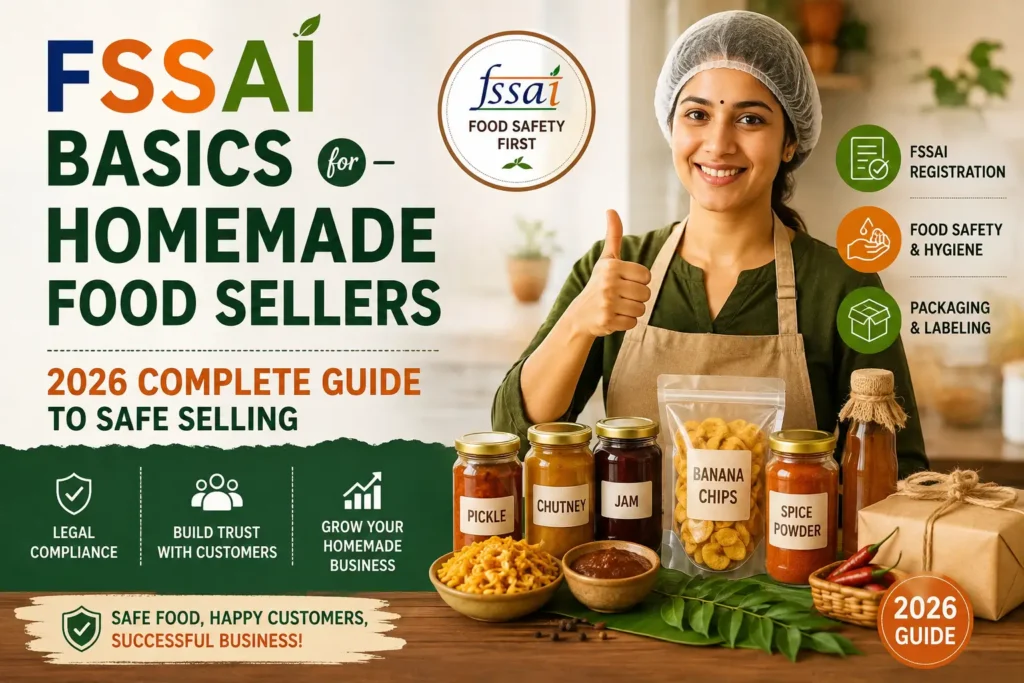
FSSAI Guide basics for homemade food sellers are essential for anyone who prepares food at home and wants to sell it legally, safely and professionally. Whether you make cakes, pickles, snacks, spice powders, traditional foods, sweets, homemade sauces or other packaged foods, food safety should be part of your business from the beginning.
Starting a homemade food business can be exciting. Many small entrepreneurs begin with orders from neighbours, friends, WhatsApp customers or social media followers. As the business grows, however, customers expect proper packaging, clear product information, reliable hygiene and evidence that the seller is operating responsibly.
In India, food businesses are regulated by the Food Safety and Standards Authority of India, commonly known as FSSAI. FSSAI states that food business operators must be licensed or registered under the Food Safety and Standards Act framework.
The rules were updated in 2026, making this an especially important time for homemade food entrepreneurs to understand the current requirements.
What Is FSSAI?
FSSAI is the Food Safety and Standards Authority of India. It is the statutory authority responsible for implementing and enforcing food safety standards in India.
For a homemade food seller, FSSAI registration or licensing is not simply a marketing badge. It is part of the regulatory framework for operating a food business.
Your business may be small, home-based and run by one person, but once you start commercially preparing, selling, storing, distributing or supplying food, you should understand the applicable FSSAI requirements.
The exact requirements depend on the kind of food business you operate, the products you handle and the applicable eligibility criteria.
Do Homemade Food Sellers Need FSSAI Registration?
In general, yes. A home-based food business should determine its applicable FSSAI registration or licence category before starting commercial food sales.
A common misunderstanding is that FSSAI applies only to restaurants, factories or large food companies. That is not correct. Small and cottage-scale food businesses are also covered by the regulatory framework. FSSAI’s registration system specifically includes petty food manufacturers and other small food operators.
For a homemade seller, this can include businesses such as:
- Home bakers
- Homemade snack makers
- Pickle sellers
- Spice and masala sellers
- Traditional food producers
- Home-based sweet makers
- Small food packaging businesses
- Homemade sauce and condiment sellers
However, the correct category should be checked using the official FoSCoS eligibility system because food-business categories can have specific criteria.
2026 FSSAI Turnover Limits for Small Food Businesses
One of the biggest changes homemade food sellers should know about is the revised turnover threshold introduced in 2026.
From 1 April 2026, FSSAI implemented the following turnover-based categories:
| Category | Annual Turnover |
|---|---|
| FSSAI Registration | Up to ₹1.5 crore |
| State Licence | Above ₹1.5 crore up to ₹50 crore |
| Central Licence | Above ₹50 crore |
These revised thresholds were officially notified by FSSAI and replaced the earlier turnover thresholds for categorisation.
For many small homemade food businesses, this is important because a business that previously looked at the old ₹12 lakh registration limit should not automatically use that figure today.
The current 2026 threshold for registration is up to ₹1.5 crore annual turnover, subject to the applicable business category and eligibility conditions. FSSAI’s 2026 eligibility document also lists registration up to ₹1.5 crore for covered food-business categories.
Always check the current FoSCoS eligibility criteria for your exact activity before applying.
What Is FoSCoS?
FoSCoS stands for Food Safety Compliance System. It is the online system used by FSSAI for food licensing and registration activities.
The official FoSCoS portal provides options for new registration or licensing, application tracking, renewal or modification where applicable, and other compliance services.
A homemade food seller can use the official system to identify the appropriate kind of business and submit the required information.
This is better than relying on random social-media posts because official requirements can change.
A Major 2026 Change: Perpetual Validity
Another important 2026 reform is the introduction of perpetual validity for FSSAI registrations and licences.
According to FSSAI’s 2026 FAQ, registration and licences remain valid unless they are suspended, cancelled or surrendered. Food business operators therefore do not need to follow the old periodic renewal model in the same way. However, this does not remove the obligation to continue complying with hygiene, safety and other applicable legal requirements.
This is an important distinction.
Perpetual validity does not mean:
“Get FSSAI once and forget about food safety.”
Instead, it means the administrative validity framework has changed while the seller’s ongoing compliance responsibilities remain.
Basic Documents Homemade Food Sellers Should Keep Ready
The documents needed can vary by food-business type, location and application category. Before applying, check the exact document requirements displayed in the official FoSCoS process.
Depending on your situation, you may need information such as:
- Identity and contact details
- Business or premises address
- Details of the food business activity
- Food product or category information
- Photograph or supporting documents where applicable
- Premises-related information
- Business-specific declarations or documents
The important lesson is simple: do not upload random documents just because another seller used them. Follow the current official checklist applicable to your own business.
Food Safety Starts in the Home Kitchen
FSSAI basics for homemade food sellers go beyond registration. Registration alone does not make food safe.
A professional homemade food business should establish simple hygiene routines.
Keep raw materials protected from contamination. Clean preparation surfaces regularly. Use safe water. Keep utensils and equipment clean. Separate raw and cooked foods where appropriate. Store ingredients correctly and protect finished products from dust, insects, moisture and other contamination risks.
FSSAI’s hygiene guidance emphasizes food safety management, Good Manufacturing Practices and Good Hygiene Practices. The official Schedule 4 framework includes general hygienic and sanitary practices for food businesses, including petty food operators and street food vendors.
A clean kitchen is not just good for inspections. It is essential for protecting customers and building trust.
Personal Hygiene Matters Too
People often concentrate on the kitchen and forget the person preparing the food.
Food handlers should maintain good personal hygiene. Hands should be washed properly and regularly, particularly before food preparation and after activities that can introduce contamination.
Hair should be controlled, clothing should be clean and food-preparation areas should be kept organized.
If someone is sick or unable to handle food hygienically, the business should have a sensible procedure for reducing contamination risk.
For a homemade food brand, customers cannot see everything happening in your kitchen. Your operating discipline therefore becomes part of your brand reputation.
Packaging and Labelling for Homemade Food
If you sell packaged homemade products, labelling deserves special attention.
Depending on the type of packaged food and the applicable rules, labels can require information such as the name of the food, quantity, ingredients, date marking, manufacturer or brand-owner information, and the applicable FSSAI logo and licence/registration information.
FSSAI’s Labelling and Display Regulations contain requirements concerning the FSSAI logo and licence number on food labels and other declarations.
Do not copy a label from another brand without checking whether the declarations apply to your product.
A good homemade food label should be clear, readable and professionally presented.
At minimum, sellers should think carefully about:
Product name: What exactly is the product?
Ingredients: What is contained in the product?
Net quantity: How much food is in the package?
Date information: What date-related declarations apply?
Business information: Who is responsible for the food product?
FSSAI information: What registration/licence details are required?
Where a regulation applies, the exact wording and format should be checked against the latest official requirements.
Shelf Life Should Not Be Guesswork
One of the biggest mistakes made by inexperienced homemade food sellers is assigning a long shelf life without proper reasoning.
A product’s shelf life can depend on ingredients, moisture, acidity, preparation process, packaging, storage conditions and other factors.
Do not assume that a product will remain safe for months simply because someone else’s product does.
For food businesses, shelf-life decisions should be made responsibly and according to the nature of the food and applicable food-safety requirements.
When necessary, businesses should obtain suitable professional or laboratory guidance rather than guessing.
Be Careful With Health Claims
Homemade food sellers sometimes write phrases such as:
“100% cures diabetes”
“Guaranteed weight loss”
“Treats arthritis”
“Prevents cancer”
These types of claims can create serious compliance and trust issues.
Food businesses should not turn ordinary food marketing into unsupported medical promises.
Instead, focus on accurate product information, ingredients, preparation style, flavour, tradition, quality, packaging and other claims that can actually be supported.
FSSAI maintains separate regulations covering food advertising and claims, so sellers should check applicable requirements before making health or nutrition claims.
Selling Homemade Food Online
Today, a homemade food business does not have to depend only on local word-of-mouth.
A seller can build a digital presence through a website, online marketplace, social media, WhatsApp and other channels.
But digital selling creates another responsibility: your product information should be easy for customers to understand.
A product page should ideally explain:
What the product is.
How much the customer receives.
How it should be stored.
Where appropriate, applicable ingredients or allergen information.
How the product is delivered.
How customers can contact the seller.
For packaged food, required regulatory declarations should be handled properly.
Online presentation should support the physical label, not contradict it.
Sell Your Homemade Food on ShopOpen24
For homemade food sellers looking for an online marketplace, ShopOpen24 is designed to connect customers with local sellers, home businesses and independent creators. The website currently features a dedicated Food & Homemade section with categories including Cakes, Snacks, Pickles, Spices and Traditional Foods.
ShopOpen24’s seller registration page also includes food-seller fields for the FSSAI Registration / Licence Number and FSSAI Certificate, making it suitable for presenting food-business compliance information alongside a seller profile.
A homemade seller can use the marketplace to build a professional product presence instead of depending entirely on social-media messages.
Before publishing a product, make sure your seller information, food details, pricing, delivery terms and regulatory information are accurate.
A marketplace listing should support customer trust rather than simply push a sale.
Why FSSAI Can Build Customer Trust
Many customers are more comfortable buying packaged food when the seller provides clear business information and demonstrates responsible food-safety practices.
Displaying applicable FSSAI information does not replace quality, but it can help communicate that the seller is taking regulatory responsibilities seriously.
Trust can also come from:
Clear ingredient information.
Professional packaging.
Consistent product quality.
Reliable delivery.
Transparent customer service.
Accurate photographs.
Simple refund or replacement policies where appropriate.
Good reviews from genuine customers.
In other words, FSSAI compliance should be part of a bigger trust strategy.
A Simple Checklist for Homemade Food Sellers
Before selling regularly, work through this checklist:
1. Identify your food business category.
Use the official FoSCoS eligibility system.
2. Check the current turnover threshold.
For covered businesses from 1 April 2026, the registration threshold is up to ₹1.5 crore, but specific eligibility must still be checked.
3. Complete the applicable registration or licence process.
4. Create a hygienic food-preparation system.
5. Organize ingredient storage and finished-product storage.
6. Design compliant labels for packaged products.
7. Keep business records and supporting documents organized.
8. Avoid misleading medical or nutritional claims.
9. Make your online product information accurate.
10. Review FSSAI updates regularly.
Common Mistakes to Avoid
A homemade food business can lose customer trust because of small mistakes.
One common problem is selling without understanding the applicable registration or licence requirement.
Another is using an old FSSAI threshold from outdated articles. Because the rules changed in 2026, sellers should not rely on old ₹12 lakh registration information without checking the current rules.
Poor labels are another problem. Customers should not have to guess what the product contains or who made it.
Poor storage can also reduce product quality and safety.
Finally, avoid copying competitors’ descriptions, photographs or unsupported claims.
Your brand should be built on real information.
Frequently Asked Questions
Is FSSAI registration required for a homemade food business?
Food businesses in India generally need the applicable FSSAI registration or licence. The exact category depends on the nature of the business and relevant eligibility criteria.
What is the FSSAI registration turnover limit in 2026?
From 1 April 2026, the revised turnover threshold for registration is up to ₹1.5 crore for applicable food businesses. State licensing applies above ₹1.5 crore up to ₹50 crore, and Central licensing applies above ₹50 crore.
Does FSSAI registration expire every year now?
Under the 2026 reform, FSSAI registrations and licences have perpetual validity unless suspended, cancelled or surrendered. Businesses must still comply with applicable food-safety and hygiene requirements.
Where can I apply for FSSAI registration?
The official FoSCoS system is used for FSSAI food licensing and registration services.
Can I sell homemade food online?
Yes, a compliant homemade food business can use online channels to reach customers. Sellers should ensure that their regulatory, product, packaging, labelling and customer information is accurate.
Can I sell homemade food on ShopOpen24?
ShopOpen24 currently provides a Food & Homemade section and a seller registration process that collects FSSAI information from food sellers.
Is FSSAI registration enough to make my food business compliant?
No. Registration or licensing is only one part of compliance. Sellers must continue following applicable hygiene, food-safety, labelling, storage and other legal requirements.
Final Thoughts
FSSAI basics for homemade food sellers are easier to understand when you treat compliance as part of building a real business rather than as paperwork.
Start with the correct FSSAI category. Keep your kitchen and food-handling process hygienic. Use appropriate packaging and accurate labels. Avoid unsupported claims. Keep your business information organized. Most importantly, check the latest official requirements rather than relying on outdated blog posts or social-media advice.
The 2026 reforms have made the registration threshold more practical for many small food businesses, while the move to perpetual validity reduces the burden of repeated renewal. At the same time, food safety remains an ongoing responsibility.
For homemade food entrepreneurs, the opportunity is bigger than simply selling a few packets to friends. With good products, responsible food-safety practices, professional packaging and a strong online presence, a home kitchen can become the foundation of a trusted local brand.
ShopOpen24 can also be used as an online marketplace option for local food sellers who want to present their products to a wider audience and build their digital storefront.
Start small. Stay compliant. Build trust. Improve your product. And grow your homemade food business with a long-term mindset.