How Can Small Businesses Grow Online in 2026? 7 Practical Strategies
Discover practical ways to grow your small business online in 2026 with better marketing, e-commerce, SEO, customer trust, and digital tools.
how small businesses can grow online Starting a small business is an exciting journey. However, building a successful business online requires more than simply creating a website or posting products on social media. Business owners need to understand their customers, present their products effectively, build trust, and use the right digital marketing strategies.
In 2026, online shopping and digital communication continue to create opportunities for entrepreneurs, independent sellers, local businesses, handmade creators, fashion brands, and food businesses. Even a small business can reach new customers by building a strong online presence and offering a reliable shopping experience.
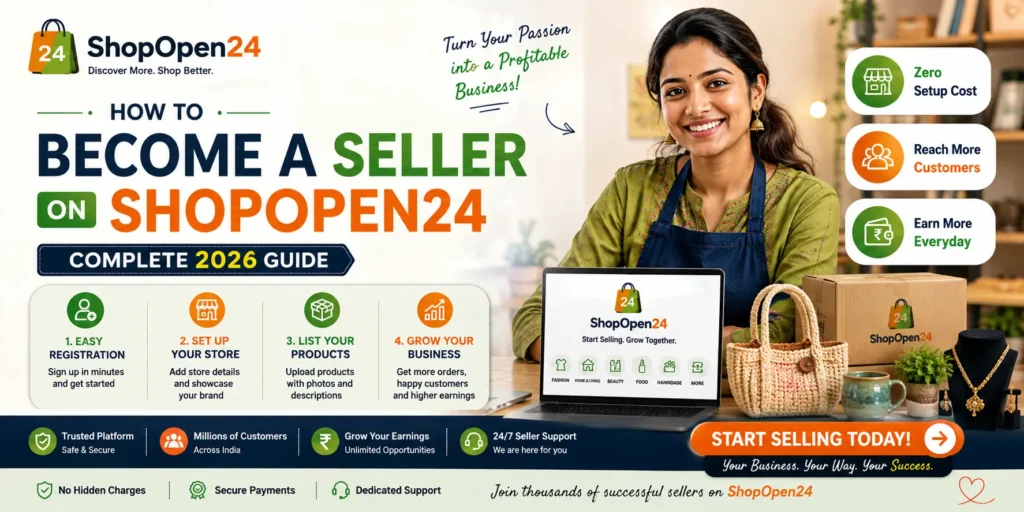
ShopOpen24 is an online marketplace designed to connect customers with local sellers, small businesses, and entrepreneurs. By helping businesses showcase their products online, ShopOpen24 supports the goal of making local products accessible to more customers.
In this guide, we explore seven practical strategies that small businesses can use to grow online in 2026.
1. Build a Professional Online Store
how small businesses can grow online One of the first steps towards online business growth is establishing a professional digital presence.
Social media platforms are useful for promoting products and communicating with customers. However, a dedicated online store or marketplace listing can help customers discover products, review product details, and understand what a business offers.
A professional online store should include:
- Clear product photographs.
- Accurate product names and descriptions.
- Transparent pricing.
- Available sizes, colours, and variations.
- Shipping and delivery information.
- Contact details and customer support options.
- Clear return, refund, and cancellation policies where applicable.
For example, a clothing seller should provide information about fabric, sizes, fit, colours, and care instructions. A handmade product creator can explain the materials, craftsmanship, dimensions, and intended use of each item.
These details help customers make informed purchasing decisions.
Small businesses can explore online marketplace opportunities through ShopOpen24, where customers and sellers can connect through an online shopping platform.
2. Use Social Media Marketing Effectively
Social media can help small businesses introduce their products to new audiences without requiring a large advertising budget.
Platforms such as Instagram, Facebook, YouTube, and LinkedIn offer different ways to communicate with potential customers. The best platform depends on the type of business and its target audience.
For example:
- Fashion brands can share outfit ideas, product photographs, and styling videos.
- Food businesses can publish menu updates, preparation videos, and product highlights.
- Handmade creators can demonstrate how their products are made.
- Service providers can share educational content, customer questions, and examples of their work.
- B2B businesses can use LinkedIn to build professional relationships and share industry knowledge.
Consistency is more important than publishing a large number of posts without a clear purpose.
Create a simple weekly content plan. You might publish a product showcase on Monday, a useful tip on Wednesday, a customer question on Friday, and a short video at the weekend.
Encourage genuine conversations by asking relevant questions. Instead of simply writing “Buy now,” explain what makes a product useful and invite people to share their preferences.
Remember to respond professionally to comments and messages. Social media works best when businesses build relationships rather than focusing only on promotion.
3. Improve Product Photos and Descriptions
Customers shopping online cannot physically inspect a product before making a purchase. Product images and descriptions therefore play an important role in the buying decision.
Use clear photographs that accurately represent the product. Whenever possible, include multiple views, close-up details, and photographs showing the product in use.
Avoid images that are blurry, excessively edited, or misleading.
Product descriptions should answer common customer questions, including:
- What is the product?
- What materials or ingredients does it contain?
- What are its dimensions or available sizes?
- How should it be used or maintained?
- What is included with the purchase?
- How will it be packaged and delivered?
For example, a handmade bag listing might explain its dimensions, fabric, colour options, storage capacity, and cleaning instructions.
A food product listing may need information about ingredients, allergens, net quantity, storage requirements, shelf life, and applicable food safety details.
Accurate descriptions reduce confusion and help customers choose products that meet their needs.
Businesses should also avoid unsupported claims. Describe product benefits honestly and provide relevant evidence for any claims that require substantiation.
4. Build Customer Trust and Provide Reliable Service
Customer trust is one of the foundations of sustainable online business growth.
A customer who feels confident about a business is more likely to consider making a purchase and recommending the business to others. Trust develops through consistent service, transparent communication, and reliable fulfilment.
Small businesses can build trust by following these practices:
Provide accurate information: Clearly explain prices, product specifications, delivery charges, and applicable terms.
Respond promptly: Answer customer questions politely and provide realistic delivery estimates.
Handle complaints professionally: Listen to the customer’s concern and explain the available resolution.
Encourage honest reviews: Invite customers to share genuine feedback after a purchase. Never buy fake reviews or misrepresent customer experiences.
Protect customer information: Use appropriate security measures and handle personal data responsibly.
Set clear expectations: Explain what happens after an order is placed, including confirmation, dispatch, delivery, and any applicable return process.
If an order is delayed, communicate the situation rather than leaving the customer without an update.
For businesses using a marketplace, it is also important to understand which responsibilities belong to the marketplace and which remain with the individual seller. Customers should know who handles payment, shipping, returns, and after-sales support.
Reliable customer service can help a small business build a stronger reputation over time.
5. Use Search Engine Optimisation to Reach More Customers
Search engine optimisation, commonly called SEO, helps search engines understand website content and helps users discover relevant pages.
Unlike advertising, organic search visibility does not depend on paying for every click. However, SEO requires useful content, good website structure, and ongoing improvement. Rankings and traffic are never guaranteed.
Small businesses can begin with a few practical steps.
Research Relevant Keywords
Think about the words customers use when searching for your products or services.
For example, a seller offering handmade jewellery might target descriptive phrases related to handmade jewellery, gift ideas, materials, or specific product types.
Choose keywords that accurately match the page. Avoid repeating the same phrase unnaturally throughout the content.
Write Useful Page Titles and Descriptions
Each important page should have a clear title and a helpful meta description. These elements should accurately describe the content and give searchers a reason to visit.
Optimise Product Pages
Use descriptive product names, original descriptions, suitable photographs, and clear product attributes. Add useful alternative text to images.
Publish Helpful Blog Articles
Blog posts can answer common questions, explain product uses, compare options, and provide practical advice.
For example, a fashion business might publish a guide to choosing everyday clothing, while a handmade business could explain how to care for handmade products.
Improve Website Usability
Make sure pages load efficiently, navigation is understandable, and content works well on mobile devices.
Businesses using WordPress can use SEO tools such as Rank Math to help manage titles, meta descriptions, sitemaps, and other optimisation settings.
The goal is not to publish content solely for search engines. Create genuinely useful information that answers the questions of your intended audience.
6. Make Pricing, Shipping, and Policies Clear
Unexpected costs and unclear policies can make customers hesitate before purchasing.
Small businesses should explain the total cost of an order as clearly as possible, including product prices, shipping charges, and any other applicable fees.
Before publishing a product, review the following:
- Is the selling price correct?
- Are shipping charges clearly explained?
- Is the estimated delivery time realistic?
- Are product variations and stock availability accurate?
- Are cancellation, return, and refund policies easy to find?
- Are any restrictions explained before checkout?
For products that are made to order, customised, or fulfilled by a third-party provider, explain the expected production and dispatch process.
Businesses should calculate their costs before deciding on a selling price. Relevant costs may include manufacturing, packaging, shipping, marketplace fees, payment processing, marketing, and applicable taxes.
For example, a product that sells for ₹500 does not generate ₹500 in profit. The actual result depends on all associated costs.
Review prices regularly and avoid making promises about delivery times that cannot be reliably met.
Clear information helps customers make better decisions and helps businesses manage expectations.
7. Use Digital Tools to Work More Efficiently
Digital tools can help small business owners save time, organise operations, and improve customer communication.
The most useful tools depend on the business, its budget, and its current challenges.
Examples include:
E-commerce platforms: Help businesses display products and manage online orders.
SEO tools: Assist with website optimisation and content analysis.
Analytics tools: Show how visitors find and use a website.
Design tools: Help create product graphics, promotional images, and social media content.
Inventory tools: Help track stock levels and reduce errors.
Customer communication tools: Help businesses answer enquiries and provide order updates.
Accounting tools: Help track income, expenses, and business performance.
Artificial intelligence can also assist with brainstorming, drafting product descriptions, generating content ideas, and organising customer FAQs. However, business owners should review AI-generated material for accuracy, originality, and suitability before publishing it.
Start with tools that solve a real problem. There is no need to purchase multiple subscriptions before understanding what your business actually needs.
Bonus Strategy: Build Relationships With Other Businesses
Online growth does not have to be a solo effort.
Small businesses can learn from other entrepreneurs, share practical experiences, collaborate on promotions, and discover potential business partnerships.
A fashion seller might collaborate with a local photographer. A handmade creator could work with a gift shop. A food business might connect with event organisers or corporate customers.
Professional communities can provide opportunities to exchange knowledge, discuss challenges, and build valuable connections.
When participating in business communities, contribute useful information rather than publishing repetitive advertisements. Ask thoughtful questions, share lessons learned, and support other members where appropriate.
Businesses can also use LinkedIn to build professional relationships and participate in discussions about entrepreneurship, e-commerce, marketing, and customer experience.
A strong business network can help entrepreneurs discover opportunities that they might not find independently.
How Can ShopOpen24 Support Online Business Growth?
ShopOpen24 is an online marketplace connecting customers with local sellers, small businesses, entrepreneurs, and product creators.
Businesses can explore whether the platform suits their products and selling model, while customers can discover products offered through the marketplace.
The broader opportunity is to make it easier for businesses to showcase their products online and help customers discover more choices.
Whether you sell fashion, handmade products, food items, or home essentials, focus on accurate product information, responsible business practices, and reliable customer service.
Before joining any marketplace, review its seller requirements, fees if applicable, order process, shipping arrangements, and payment responsibilities.
Learn more at ShopOpen24.
Conclusion
Growing a small business online in 2026 requires a combination of good products, customer understanding, effective marketing, and consistent service.
Start by building a professional online presence. Improve product photographs and descriptions. Use social media to connect with the right audience. Invest in useful SEO practices, explain pricing and shipping clearly, and use digital tools that make your work easier.
Most importantly, measure your results and learn from customer feedback. You do not need to implement every strategy at once. Choose one or two improvements, test them, and gradually build a stronger online business.
Every successful business begins with an idea. With careful planning, consistent effort, and a focus on customer value, that idea can develop into a sustainable business.
Ready to explore online marketplace opportunities?
Visit ShopOpen24.com and discover a marketplace connecting customers and businesses.
ShopOpen24 — Open Your Shop. Sell to Everyone.
Frequently Asked Questions (FAQs)
1. How can a small business grow online in 2026?
Start with a professional online presence, accurate product listings, social media marketing, useful SEO, transparent pricing, and reliable customer service. Improve your approach based on customer feedback and measurable results.
2. Can I grow my business online with a small budget?
Yes. Start with free or low-cost tools, improve existing product photographs, publish helpful content, use relevant social media channels, and encourage genuine customer feedback. Invest in paid services only when they support a clear business goal.
3. Is SEO important for small businesses?
SEO can help potential customers discover relevant products, services, and information through search engines. Results depend on competition, content quality, technical factors, and other signals, so rankings cannot be guaranteed.
4. What should an online product listing include?
A useful listing includes an accurate title, clear photographs, detailed product specifications, price, available variations, delivery information, and relevant policies.
5. How can I build trust with online customers?
Provide honest product information, communicate clearly, protect customer data, fulfil orders reliably, handle complaints professionally, and encourage genuine reviews.
6. How can ShopOpen24 help my business?
ShopOpen24 is an online marketplace that connects customers with local sellers and businesses. Visit the website to explore the platform and review its seller options.
7. Should I use social media or an online marketplace?
They serve complementary purposes. Social media can help you build awareness and relationships, while an online marketplace can provide a place for customers to discover products. Your best approach depends on your business model and target audience.