If you’ve ever watched American news coverage or scrolled through election headlines, you’ve almost certainly asked yourself: what is a Democrat? It’s one of the most searched political questions in the United States, especially around election season, yet the answer is more layered than a single sentence can capture. In this guide, we’ll break down exactly what a Democrat is, where the term comes from, what the party stands for, and how it fits into the bigger picture of American government — in plain, easy-to-understand language.
1. The Basic Definition: What Is a Democrat?
At its simplest, a Democrat is a member or supporter of the Democratic Party, one of the two major political parties in the United States (the other being the Republican Party). Someone can be a “Democrat” in two main ways:
- Registered Democrat — a voter who has officially registered with the Democratic Party in their state, which in some states affects which primary elections they can vote in.
- Democrat by identification — someone who consistently votes for and supports Democratic candidates and policies, whether or not they’re formally registered with the party.
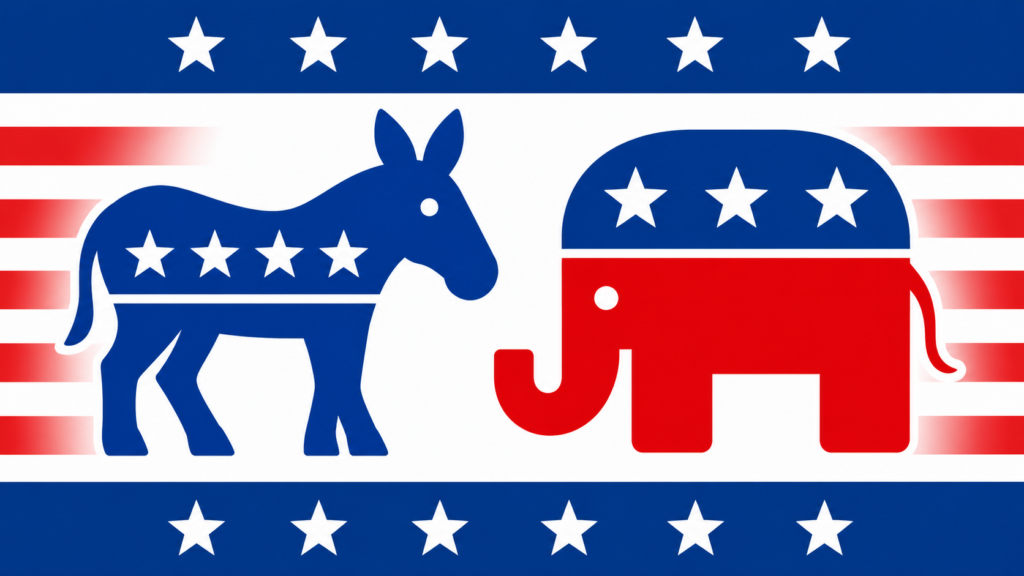
The party is represented by the symbol of a blue donkey, and its signature color in US election maps and media coverage is blue — which is why you’ll often hear commentators refer to Democratic-leaning states as “blue states.”
2. A Quick History Lesson
Understanding what a Democrat is today means understanding where the party came from. The Democratic Party traces its roots back to the late 1820s and early 1830s, built around the political coalition that supported Andrew Jackson. This makes it one of the oldest continuously operating political parties in the world.
Over nearly two centuries, the party’s identity has shifted dramatically. In the 19th century, the Democratic Party was associated with very different politics than it is today — including, in parts of the country, support for slavery and later segregation in the post-Civil War South. Through the 20th century, especially during the Great Depression and the civil rights era, the party reshaped itself around a very different platform: expanded government programs, labor protections, and civil rights legislation. This evolution is a good reminder that political parties aren’t static — their platforms and coalitions change with each generation.
3. Where Democrats Sit on the Political Spectrum
Politically, the Democratic Party is generally described as sitting on the center to center-left of the American political spectrum, associated with what political scientists call “modern liberalism.” In everyday conversation, people often use “Democrat,” “liberal,” and “progressive” somewhat interchangeably, though technically:
- Liberal describes a set of political beliefs (favoring active government involvement in the economy and society).
- Progressive often refers to the more left-leaning wing within the party, pushing for faster or more expansive reforms.
- Democrat refers specifically to membership in or support of the party itself.
Not every registered Democrat identifies as “liberal” or “progressive” — the party includes a wide range of views, from moderate, centrist Democrats to more progressive members.
4. Core Issues Democrats Typically Prioritize
While individual Democrats can hold a wide range of personal views, the party’s platform has generally emphasized certain recurring themes over the past several decades:
- Healthcare access — support for expanding public healthcare programs and protections for pre-existing conditions.
- Economic policy — support for a progressive tax structure, worker protections, labor unions, and a higher minimum wage.
- Social programs — support for programs like Social Security, Medicare, and Medicaid, along with education funding.
- Civil rights and equality — historically a strong focus on voting rights, racial equality, and protections for LGBTQ+ individuals.
- Environmental policy — support for climate change action and clean energy investment.
- Reproductive rights — generally supportive of access to abortion and reproductive healthcare.
It’s worth noting that party platforms evolve from election to election, so the specific policy priorities can shift depending on the political climate, the party’s leadership, and current events.
5. How the Democratic Party Is Organized
The party isn’t one single entity making every decision — it’s a network of organizations:
- The Democratic National Committee (DNC) coordinates party strategy, fundraising, and messaging at the national level.
- Each state has its own state-level Democratic Party committee, which runs local campaigns and organizes state conventions.
- Elected Democrats in Congress organize into caucuses (such as the House and Senate Democratic caucuses) led by their own internal leadership.
- Every four years, the party holds a National Convention, where delegates formally select the party’s presidential nominee.
This layered structure is similar to how most national political parties around the world are organized — a national coordinating body, supported by state and local chapters, with elected officials forming their own internal leadership structures.
6. Democrat vs. Republican: The Short Version
Since “what is a Democrat” is often asked alongside “how is that different from a Republican,” here’s a quick side-by-side comparison of general tendencies (not absolutes — individuals vary):
| Topic | Typical Democratic Position | Typical Republican Position |
|---|---|---|
| Government’s role | Larger, more active role | Smaller, more limited role |
| Taxes | Progressive taxation, higher rates on top earners | Lower taxes across the board |
| Healthcare | Expanded public healthcare programs | Market-based, private-sector solutions |
| Environment | Stronger regulation, clean energy focus | Lighter regulation, energy independence focus |
| Social issues | Generally more liberal/progressive | Generally more conservative |
Again, these are generalizations — both parties include members with a wide range of personal views, and “moderate” voters often hold a mix of positions from both sides.
7. How to Become a Democrat (or Just Vote Like One)
If you’re a US citizen wondering how the process actually works:
- Register to vote in your state (requirements vary).
- When registering, most states let you select a party affiliation, including “Democrat,” “Republican,” “Independent,” or other options.
- Being registered doesn’t obligate you to vote for every Democratic candidate — US elections use a secret ballot, so your vote is private regardless of registration.
- In states with closed primaries, your registered party determines which primary election you can vote in.
You don’t have to formally register as a Democrat to support Democratic candidates or causes — plenty of independents and unaffiliated voters consistently vote Democratic.
Frequently Asked Questions
Is “Democrat” the same as “liberal”?
Not exactly. “Democrat” refers to party affiliation, while “liberal” refers to a set of political beliefs. Most Democrats lean liberal, but not all liberals are registered Democrats, and the party includes moderates too.
What’s the Democratic Party’s symbol?
A blue donkey, a symbol that dates back to the 1800s and was popularized by 19th-century political cartoonist Thomas Nast.
Why is blue associated with Democrats?
It became standard in US media election-night graphics in the late 1990s and early 2000s and has stuck ever since — it’s a media convention rather than an official party rule.
Final Thoughts
So, what is a Democrat? In short: a supporter or member of one of America’s two major political parties, generally associated with center-left policies on economic, social, and environmental issues, organized through a national committee and state-level chapters, and represented by the blue donkey symbol. Like any political party, the Democratic Party isn’t a monolith — it’s made up of millions of individuals with their own priorities, all loosely united under a shared political coalition.
Understanding terms like this helps make sense of the news, elections, and everyday political conversations — the same way understanding business and marketplace terms helps you navigate running an online store. If you’re building out a small business or looking to list your shop, check out the shopopen24.com community and add your business pages to get started.